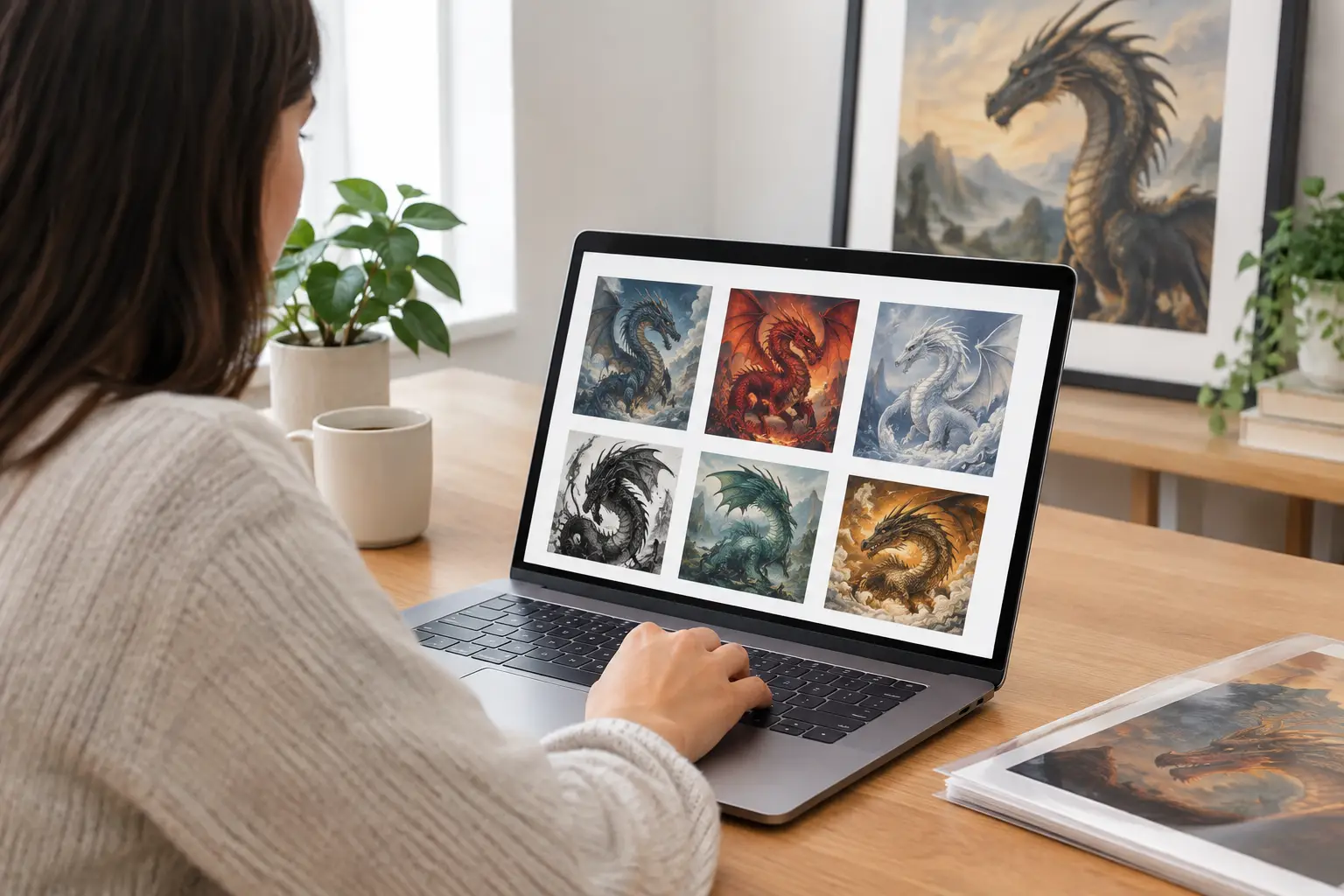
A dragon print earns its place on a wall long before it reaches the frame. It begins with the feeling you get when you see it: a watchful eye in moonlit brush, a feathered wyrm crossing a storm, a quiet hatchling curled among wildflowers. When shopping for dragon art prints online, that first spark matters. The practical details matter, too, because the right paper, size, artist, and finish determine whether a piece remains a passing favorite or becomes part of your personal realm.
Buying art online should feel more personal than scrolling through an endless catalog. Fantasy collectors are not only looking for decoration. They are choosing atmosphere, supporting creators, and often finding visual companions for the stories they already carry with them.
Start With the Dragon World You Want to Live With
Not every dragon artwork belongs in the same space. A dramatic, fire-lit ancient dragon can anchor a game room, library, or dark-academia corner. A nature-inspired dragon resting beside mushrooms or ferns may bring warmth to a bedroom, studio, or reading nook. Some collectors prefer clean, graphic designs with bold silhouettes, while others want painterly scenes full of scales, mist, branches, and distant mountains.
Before comparing print options, pause over the emotional temperature of the artwork. Ask what you want the piece to do in the room. Should it feel protective, mysterious, playful, fierce, or serene? This is more useful than choosing by color alone. A print can match a sofa and still feel out of place if its energy fights the room.
It also helps to consider the dragon itself. Western dragons, eastern dragons, wyverns, sea serpents, drakes, and wholly original creatures carry different visual histories. A collector who loves wildlife illustration may be drawn to anatomical details and natural habitats. Someone building a fantasy gallery may prefer characters, lore, and cinematic scenes. There is no better choice, only a more intentional one.
How to Evaluate Dragon Art Prints Online
A thumbnail can make almost any image look polished. A thoughtful listing tells you what will actually arrive at your door. Look beyond the artwork preview and seek clear information about print method, dimensions, paper, edition status, and fulfillment expectations.
Paper and print method shape the final image
Fine art giclée prints are commonly valued for rich color, detail, and longevity when produced with archival inks and quality paper. Matte paper often suits atmospheric fantasy art because it reduces glare and preserves subtle textures in fog, feathers, fur, and painted scales. Glossy or semi-gloss finishes can make saturated color and sharp contrast pop, though they may reflect more light once framed.
Paper weight and texture affect the experience, too. Smooth paper can favor crisp linework and highly rendered digital painting. Textured fine art paper can give an image a more tactile, traditional feel. Neither is automatically superior. A luminous dragon eye study may benefit from a smooth finish, while a woodland dragon scene can feel especially convincing on a softly textured stock.
If these details are missing, treat that as a reason to ask questions before purchasing. Artists and platforms that describe their materials clearly are making it easier for collectors to choose well.
Size is about viewing distance, not just available wall space
A small print can be powerful when viewed closely, especially for intimate portraits, detailed Dragon Eye artwork, or quiet character studies. Larger prints create presence from across the room and are often better for landscapes or compositions with multiple creatures and environmental detail.
Use painter's tape to mark the listed dimensions on your wall. Then step back to the distance where you will usually see the piece. This simple test can prevent a common disappointment: ordering a print that is technically the right size but visually too small for the wall, or so large that fine details become harder to appreciate in a crowded space.
Remember that the frame and mat add visual scale. An 8-by-10-inch print with a generous mat may read like a far larger finished piece. Conversely, a borderless oversized print may have a bold, poster-like impact. Both can work beautifully, depending on the atmosphere you are building.
Open editions and limited editions serve different collecting goals
An open-edition print is usually available for ongoing purchase. It is a welcoming choice for fans who want excellent artwork at an accessible price, or for collectors assembling a larger themed wall over time. Limited editions are produced in a fixed quantity, often numbered and sometimes signed by the artist. Their appeal lies in scarcity, collectibility, and a closer connection to a particular release.
A limited edition is not inherently more meaningful than an open edition. If the image speaks to you, it can be the right print regardless of edition type. But if you care about rarity, future availability, or collecting an artist's milestone work, check how the edition is documented. Look for the edition size, whether the print is signed or numbered, and whether artist proofs are identified separately.
Buy From Artists Whose Work Has a Point of View
The most memorable fantasy collections feel curated because the collector follows a visual thread. That thread might be dragon anatomy, celestial palettes, folklore, bioluminescent forests, or creatures integrated into real ecosystems. Buying directly from artists or from artist-centered marketplaces makes it easier to recognize that point of view.
Explore more than one image before deciding. An artist's gallery may reveal recurring motifs, from luminous eyes and ancient ruins to birds, moths, or wild botanical forms. If you find yourself returning to several pieces, you have likely found more than a single attractive print. You have found a creative world you want to revisit.
This artist connection is part of what makes a specialized space such as StarDragon Studios different from a generic image marketplace. A gallery, portfolio, community feed, and commission path can give collectors meaningful context while giving creators a professional place to present their work, manage orders, and build sustainable careers.
For collectors, that connection also brings a useful responsibility. Respect stated usage terms. Purchasing a print is not the same as purchasing rights to reproduce the image, use it for branding, or distribute it digitally. Clear boundaries protect the artist's livelihood and keep the creative ecosystem thriving.
Plan the Frame Before You Place the Order
Framing can elevate an art print, but it can also change its mood. A natural wood frame often pairs well with nature-forward dragon work, especially pieces with forests, mountains, and earthy color. Black frames can sharpen darker fantasy scenes and make saturated artwork feel more dramatic. Gold, bronze, or antique-style frames can suit regal dragons, illuminated-manuscript influences, and ornate mythology.
Use UV-protective glazing if the print will hang near windows or in a bright room. Direct sunlight can fade even high-quality art over time. If reflection is a concern, consider a matte or anti-reflective glazing option, particularly for dark artwork with large areas of shadow.
A mat gives the image breathing room and can protect it from touching the glass. White or warm ivory mats are classic choices, but a charcoal, deep green, or muted burgundy mat may strengthen the palette when used carefully. Let the art lead. A heavily decorated frame and an intricate fantasy painting can compete for attention, while a simpler frame lets the dragon remain the focal point.
Build a Collection, Not a Perfectly Matched Set
Collectors sometimes hesitate because two dragon prints do not share the same palette or rendering style. A little variation can make a wall feel alive. The key is finding a connective thread: similar frame finishes, recurring natural motifs, a shared sense of scale, or a consistent emotional tone.
Try grouping works into a loose narrative. A watchful dragon eye could sit near a misty forest scene, followed by a smaller print of a dragon in flight. The pieces do not need to illustrate the same story. They only need to give the viewer a reason to linger.
If you are starting with one print, choose the work you would still want to see on an ordinary Tuesday. The best dragon art does not need a special occasion to feel magical. It can quietly hold the edge of a room, reminding you that imagination deserves a place in daily life.